

=NEWS FLASH=
We have a Black Friday challenge for you—see below for details. But first, our Packard story continues...
The Depression Hits
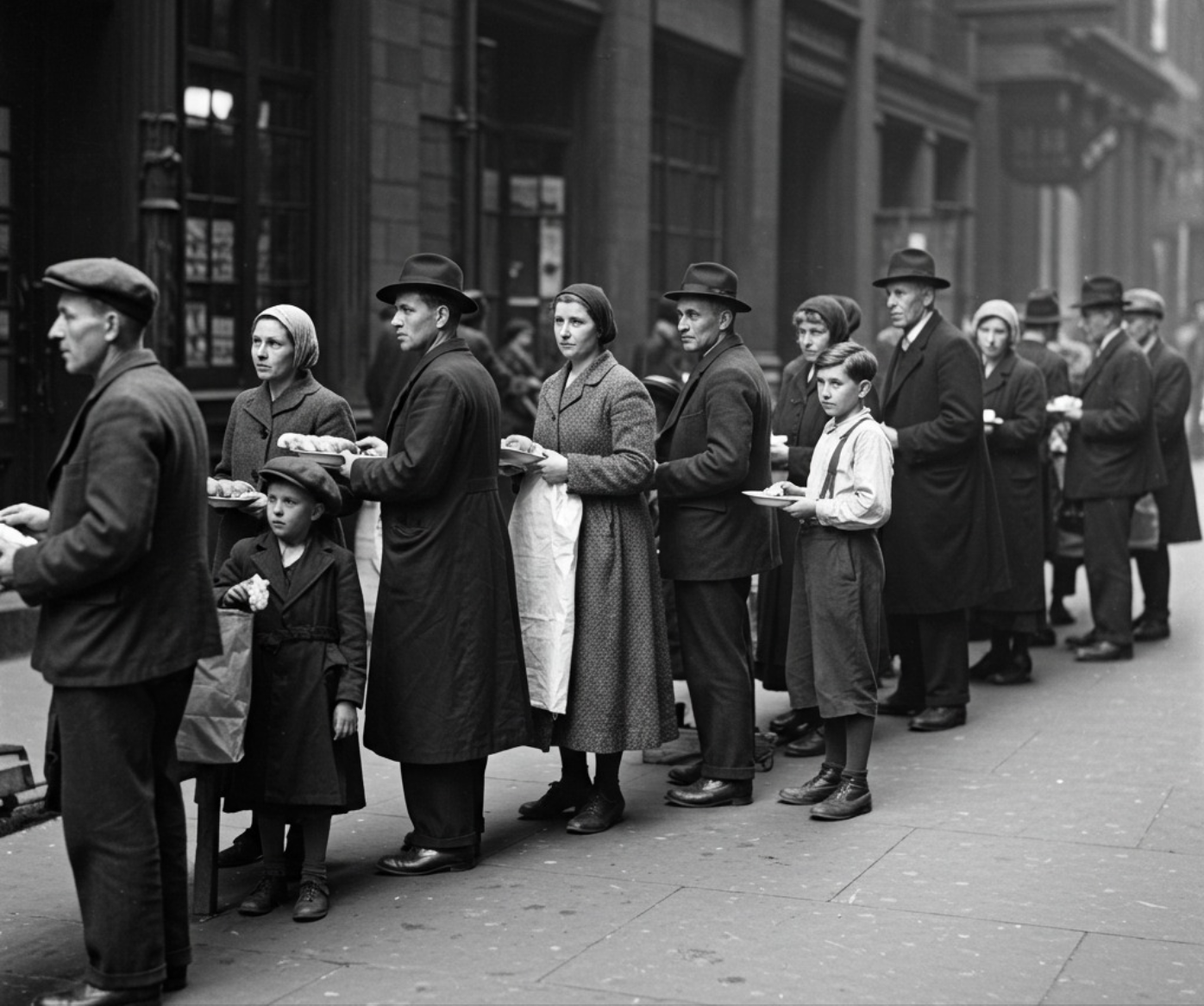
1931 and the Great Depression in the U.S. image courtesy IPTC image library
1931 was a bad year for most car companies, Packard included. But 1932 would be even worse. The stock market had crashed in 1929, but it took a couple of years for it to affect the American economy as a whole. Using Packard as an informal indicator of luxury market sales, the trend was easy to spot:
• 1929: approx. 55, 000 units sold, a good year for Packard
• 1930: 20, 633
• 1931: 9, 441
• 1932: 5, 941
Packard would limp on through the Threadbare Thirties by downsizing their cars to compete in the middle market of superior quality but reduced price. Their Model One-Twenty line, introduced in 1935, kept the doors open and is now considered a classic among contemporary collectors. Selling close to 25,000 that year, the One-Twenty outsold all other models of Packard by over 3-to-1. The custom luxury vehicles that Packard was known for quietly took a backseat for the interim.
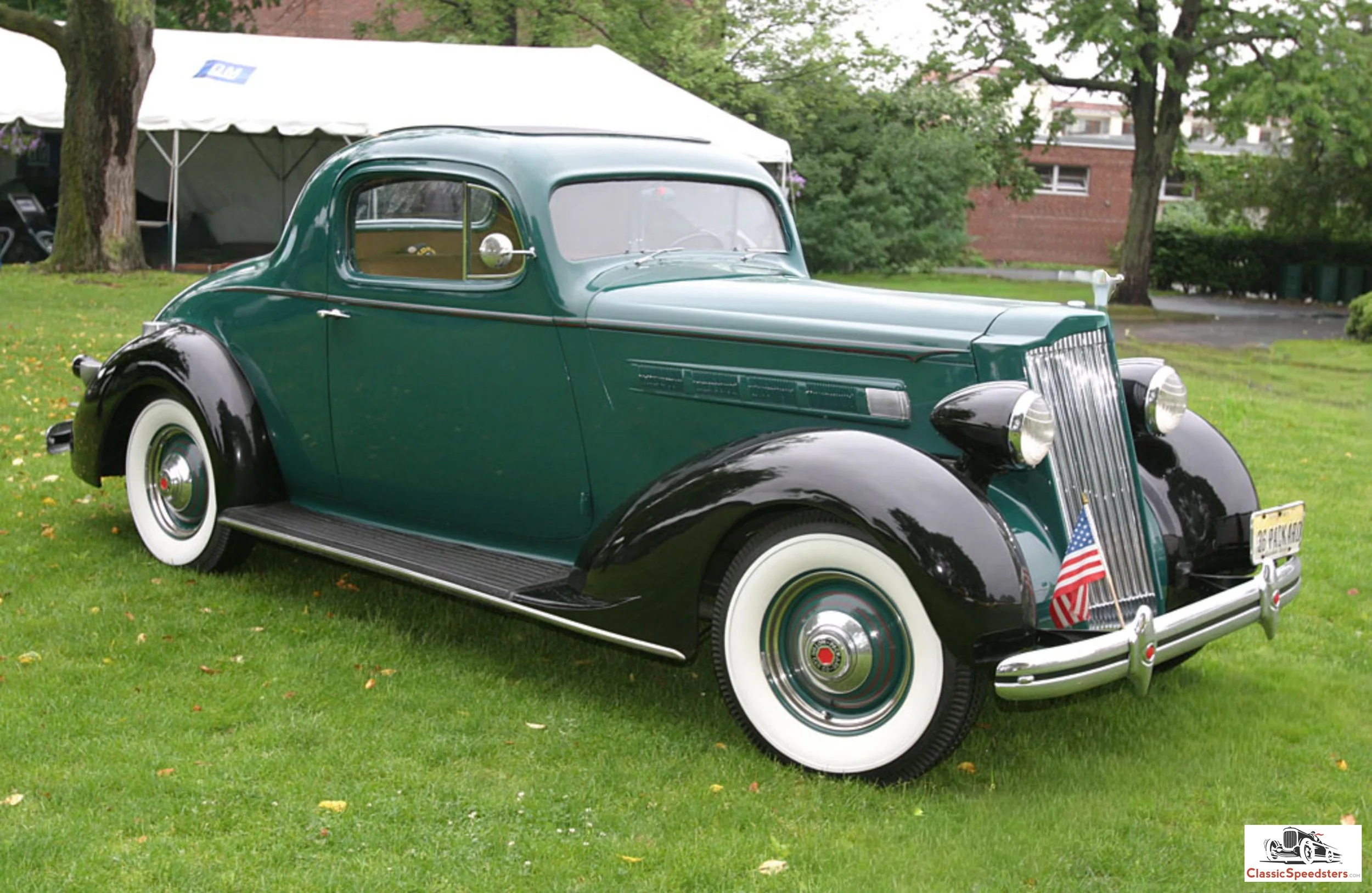
1935 Packard One-Twenty Coupe image courtesy Supercars.net
That doesn't mean that Packard abandoned the luxury arm of its business. They just sold way fewer. Meanwhile, Packard was quietly using a speedster as a design mule to try out new concepts.
Edward MacCauley and Alxis de Sakhnoffsky
The Twin Six series of Packards represented the best of the company, an engine tradition that began with the Twin Six (twelve cylinder) introduced by newly hired Jesse Vincent in 1916.
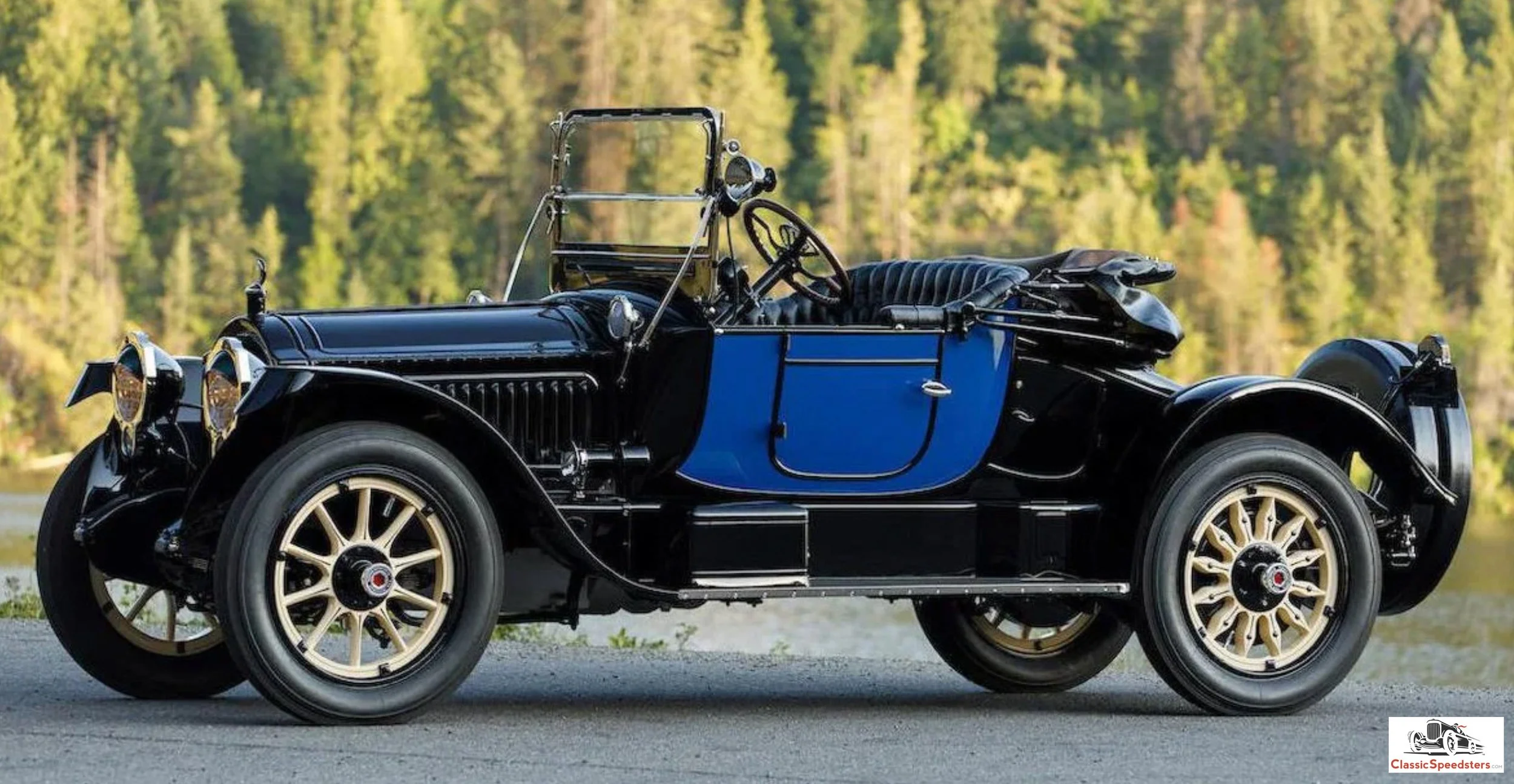
1916 Packard Twin Six Roadster image courtesy The Audrain Collection
The Twin Six model line and its engine that had begun in 1916 was retired in the mid-twenties with the advent of the eight-cylinder models. But then the engine was brought back in 1932 to again power Packard's most luxurious models and compete directly with other luxury makes who had been flaunting their twelves and sixteens since 1930.
So, for 1933, the Ninth Series Twin Six model line experienced a minor rebirth, and thereafter it was renamed the Eleventh Series Twelves for 1934.
Indirectly related to this refocus of the Packard Senior (luxury) lines, President Alvin Macauley's son, Edward, had started his career in the 1920's at Packard as an aircraft diesel mechanic and diesel salesman. Because of his talent with auto design, Edward was promoted to the Custom Body Shop in 1932 to oversee its works as Manager.
Raymond Dietrich had been a consulting designer to Packard during this period, and when Macauley hired Count Alexis de Sakhnoffsky to revamp Packard's Ninth Series Twin Six line for 1932, Dietrich left, probably miffed at this change. However, from that new partnership between Macauley and de Sakhnofsky, who was a master of European design trends, The Eleventh Series Twelves came forth in 1934.
The Brown Bomber
Ed Macauley must have been a speedster nut at heart, for he had his staff fashion a test bed speedster that, over the span of several years, would try out variations of fenders, front ends, and tails that would later be used on Packards production cars. in the 1930's and 1940's. No doubt these mods— pontoon fenders, pointed boattails, long hood—were a reflection of de Sakhnovsky's influence.
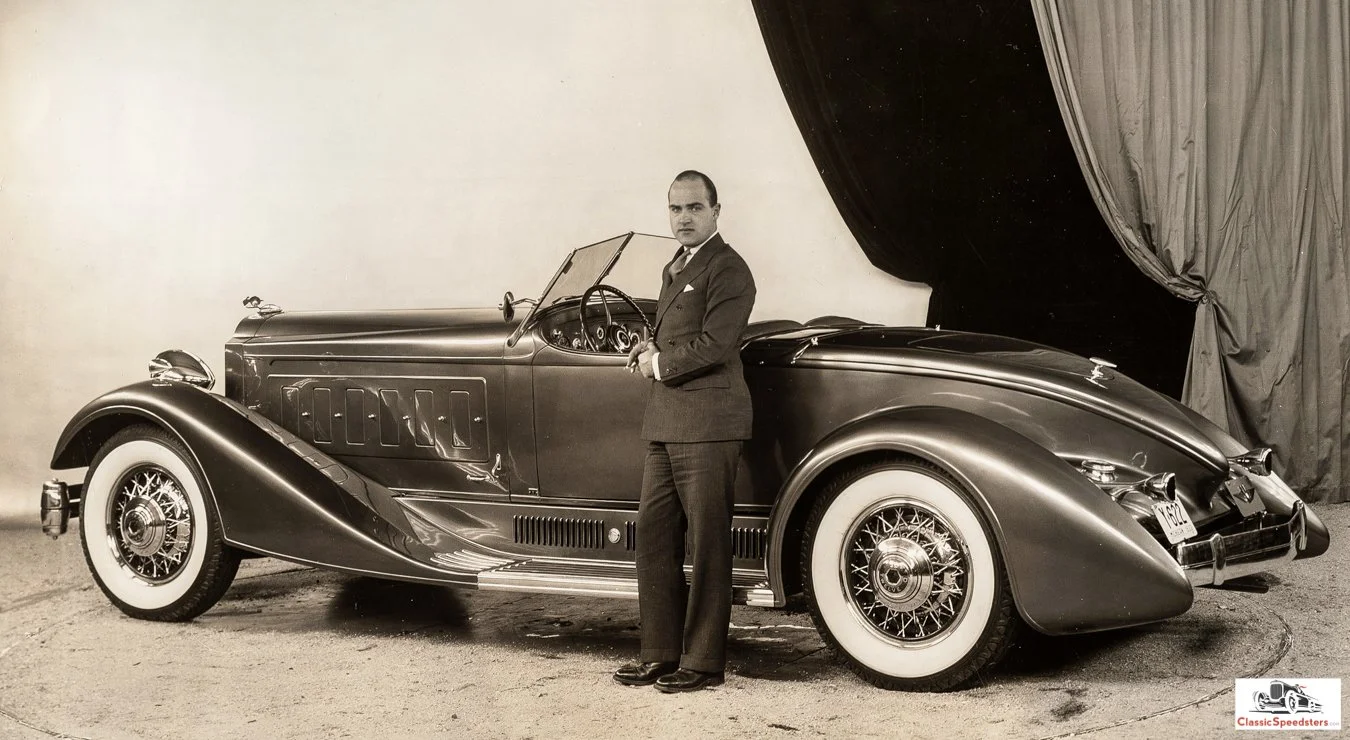
1933 Macauley Packard Speedster, a.k.a. “The Brown Bomber”
It's debatable where Macauley's "Brown Bomber," as it was allegedly called by the design staff, got its nickname, but it probably described their boss motoring around in it. And the speedster was reportedly fitted out with aircraft instrumentation, including an altimeter. Now, who wouldn't drive the heck out of something as beautiful as this concept was!
The Eleventh Series line of Packard twelve-cylinder luxury automobiles was Packard's answer to Cadillac, Peerless, and all the other challengers to its reputation of being America's premier luxury automobile. During its heyday in the Roaring Twenties, Packard had commanded 40% of the luxury market. Now, not so much...
Previously mentioned, Sakhnoffsky brought European-style aerodynamic lines to the series. And, of course, the Eleventh Series Twelve models would offer luxurious examples from their Packard Custom Cars brochure, or if the client preferred, a private coachbuilder.
Sakhnoffsky had designed sports cars while living in Switzerland after he fled the Bolshevik Revolution in Russia, and after emigrating to the United States, Sakhnoffsky designed for the Hayes Body Corporation, eventually doing projects for Auburn and Cord, Studebaker, as well as Packard and American Austin.
The Eleventh Series Twelve Speedsters
Sakhnoffsky’s pen no doubt sketched out the 1933-34 Eleventh Series line of speedsters, most notably the Model 1106 Twelve Sport Runabout. Only a handful were built, and according to noted designer Hugo Pfau, author of The Classic Body Era, all three models were made at LeBaron-Detroit's workshop for Packard.
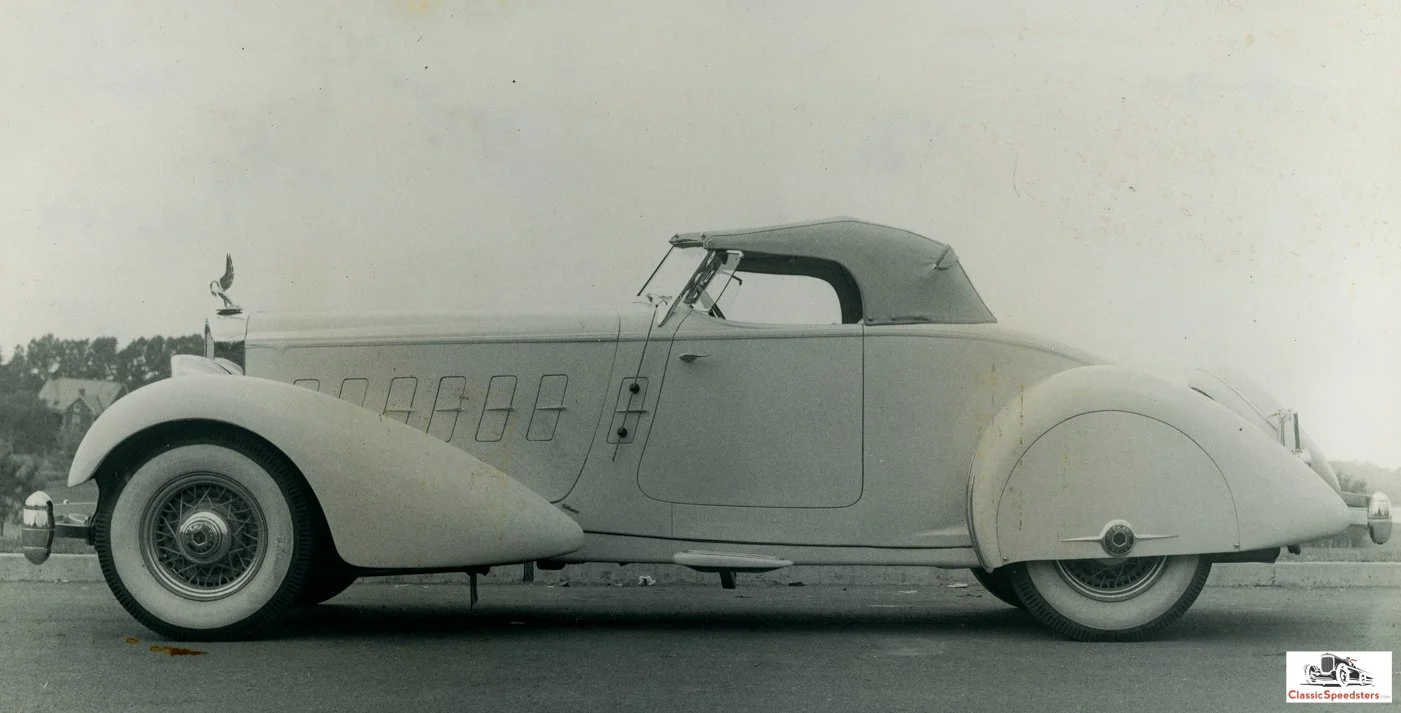
1933 Packard V-12 Speedster image courtesy AACA Library
The 1106 Sport Runabout Speedster, as well as its siblings, the 1108 Sport Phaeton and the 1106 Sport Coupe, were Sakhnoffsky's ideas, the Euro influence that would later be seen in the Mercedes Autobahnkurier and other makes.
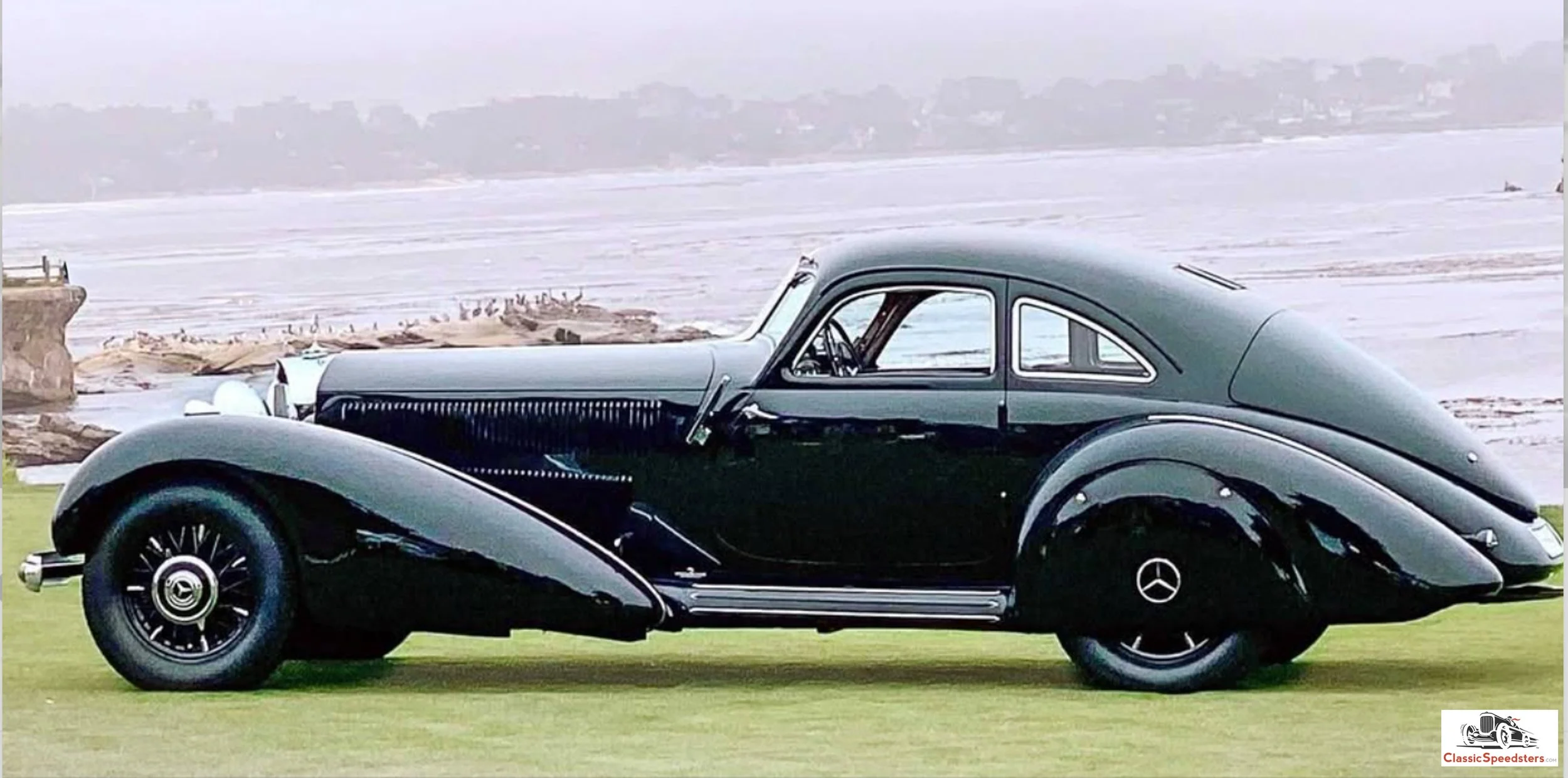
1934-38 Mercedes Autobahnkurier image courtesy Wikimedia
It was common practice for designers to take inspiration from each other’s work, sometimes even blatantly stealing each other’s ideas. Thus, many of the 1930s luxo speedsters dramatically resembled each other, except for in the details. The 1930's were the glory days of aerodynamically-inspired automotive design!
The 1106 Twelve Sport Runabout is the most iconic design of the three Packard 12-cylinder speedsters and adheres closest to the traditional concept of “speedster.” As automotive historian Richard Burns Carson wrote in his book, The Olympian Cars:
"The Runabout Speedster and the Sport Phaeton occupy
a very special niche in the history of automotive styling
because they were virtually the only attempt to bring
radically streamlined contours to traditional open body
types."
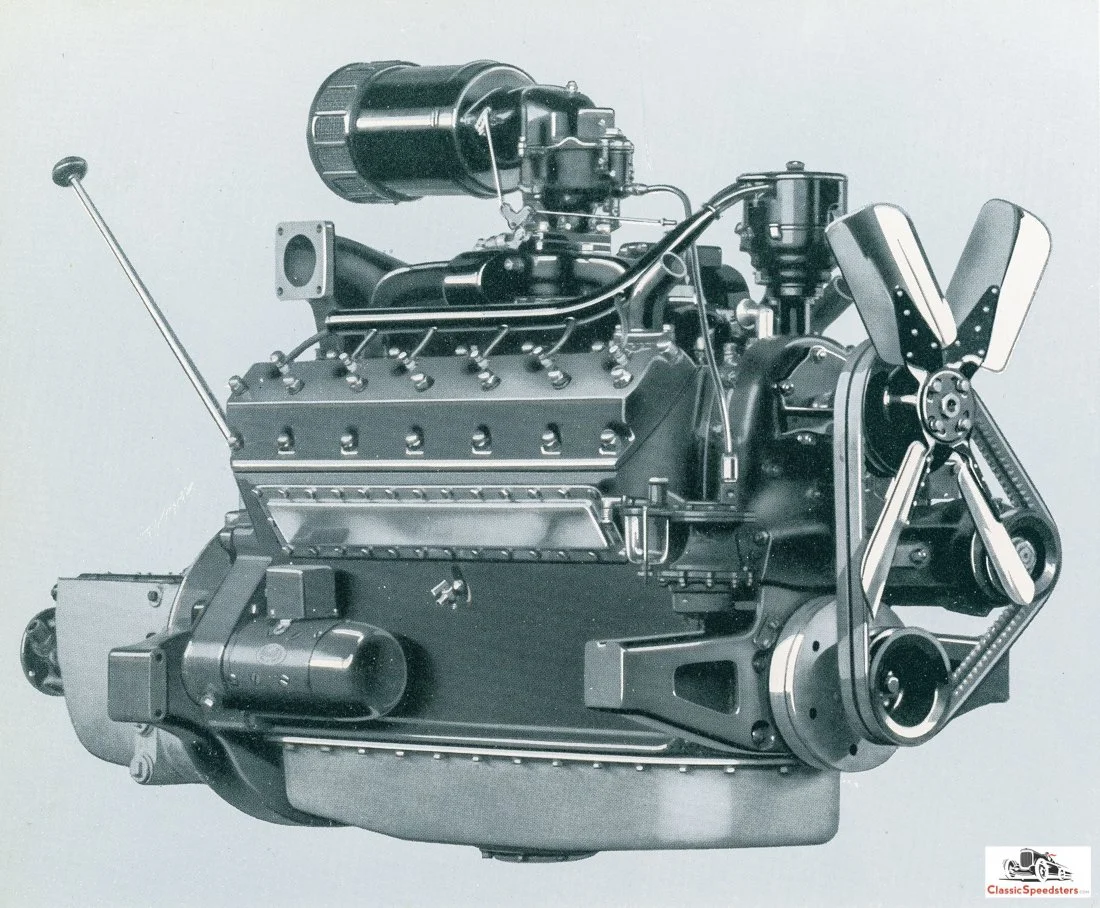
1933 Packard V-12 engine
All three models employed the 445 CID 12-cylinder engine that put out 160 bhp. Both the Sport Runabout and Sports Coupe rolled on the 135-inch Super Eight chassis, while the Sport Phaeton used a larger 147-inch chassis, two inches longer than the Duesenberg’s “standard” chassis. These cars were BIG speedsters!
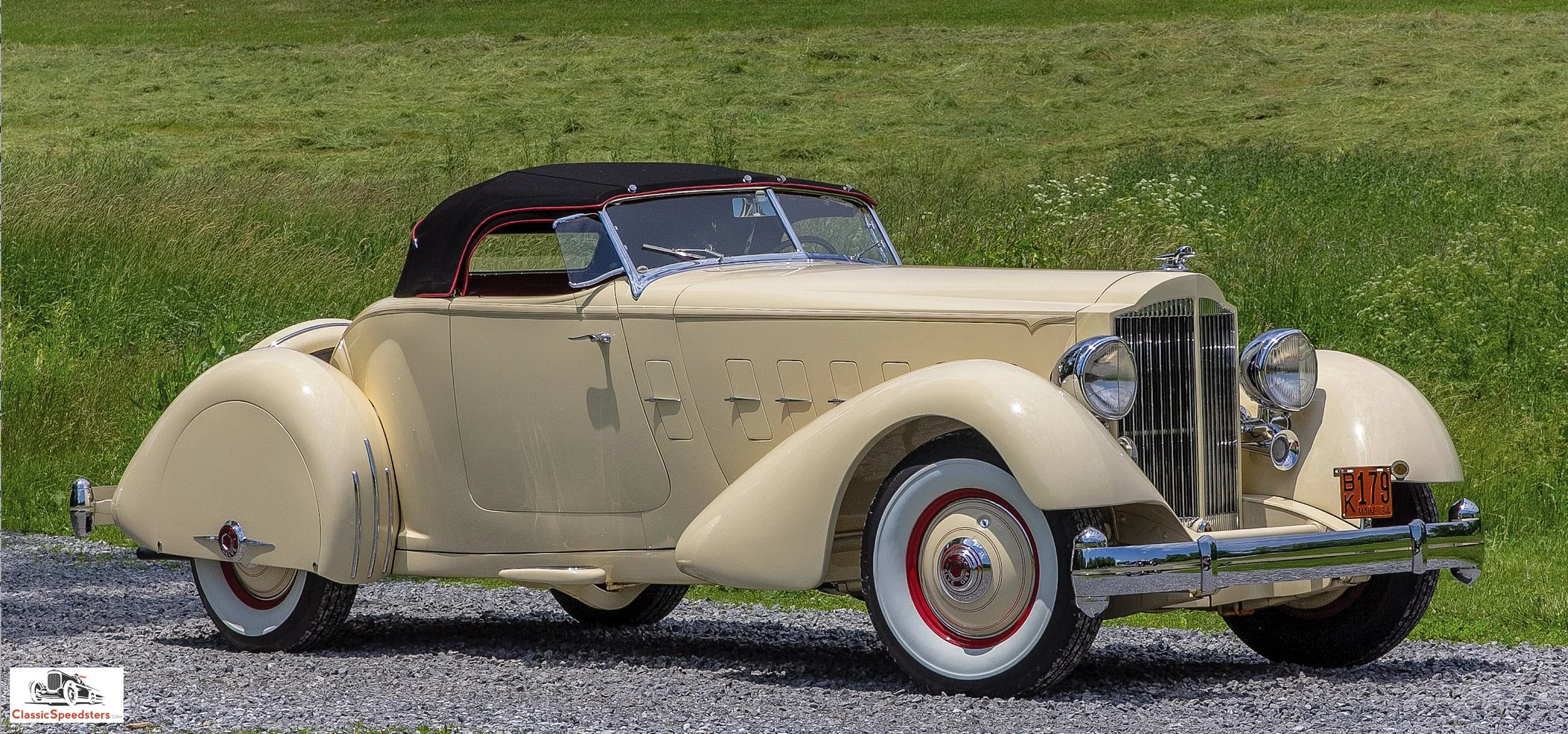
1934 Packard 1106 Eleventh Series Twelve Sports Runabout Speedster. Quite a name! Quite a car! image courtesy West Peterson, Antique Automobile magazine
As large and ungainly as they may appear, these cars were capable of exceeding 100 mph. And only a handful of these were produced, making them quite valued and valuable.
To this day the 1106 Sports Runabout and Coupe retain holy grail status for Packard collectors. Edward Blend had tracked down nine of the original eleven of these behemoths and wrote about them in his book, The Magnificent Packard Twelve of 1934. Only a handful...
Blend’s book is as hard to find as one of Packard’s Eleventh Series Twelve Speedsters but is not nearly as costly.
So, if you can find a yourself a copy of the book, buy it!
=AND=
There's a Black Friday Challenge on ClassicSpeedsters.com!
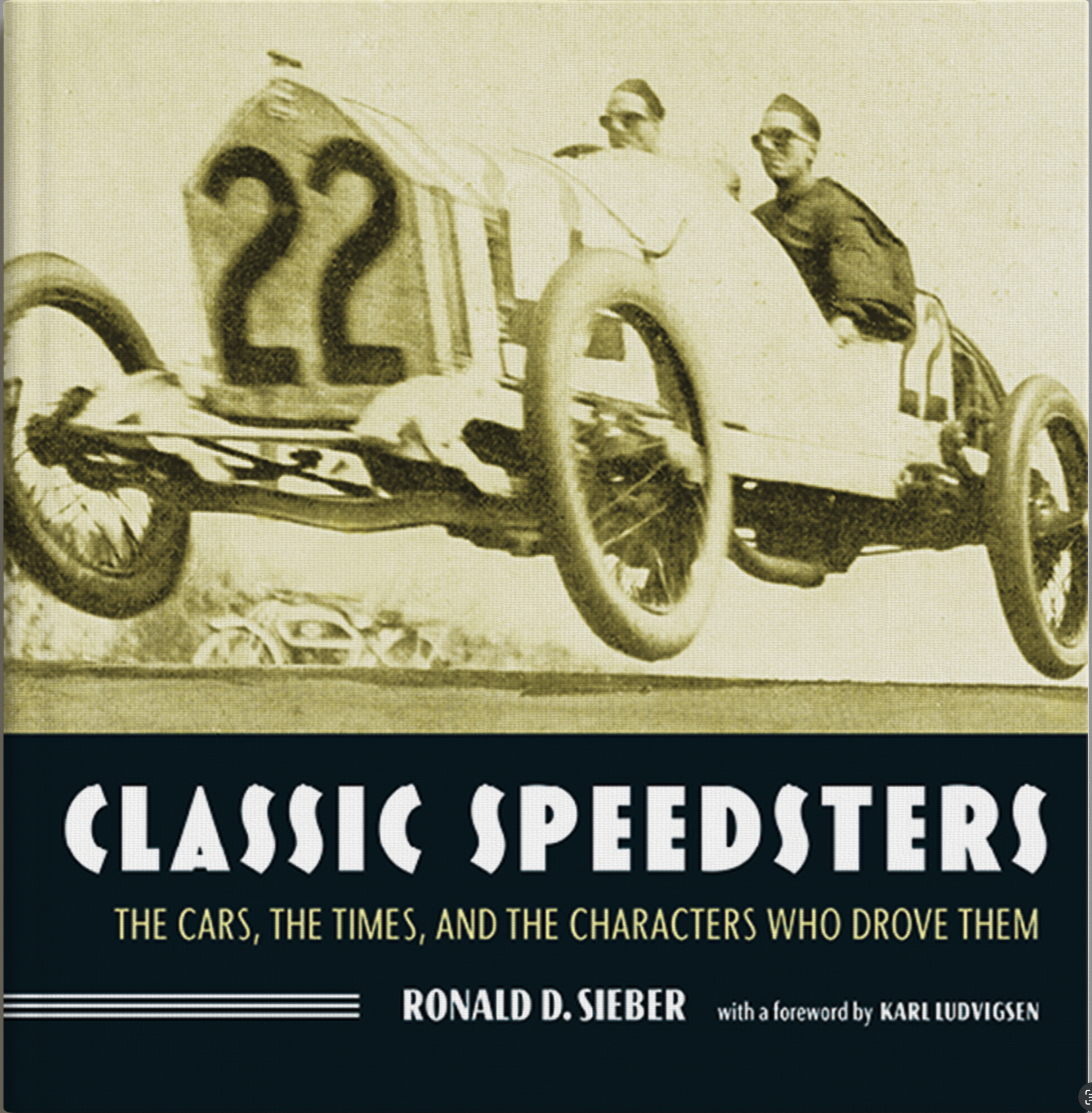
In case you are wondering, that’s a 1913 Stutz racer on the cover. And yes, Stutz is one of twelve awesome chapters in this book!
Here's the challenge:
1. If you are one of 12 orders that I receive for a copy of Classic Speedsters between November 28 and December 31, 2025, I'll enter your name into a drawing for a digital ePDF of Classic Speedsters. If you purchase a copy of Classic Speedsters from Amazon, please email a copy of your receipt to Admin@RonaldSieber.com so that I can enter your name in the drawing; Amazon does not share personal information.
2. If you are one of 20 orders for a digital ePDF copy of Classic Speedsters during the same period as mentioned above, I'll enter your name into a drawing for a physical copy of Classic Speedsters. The digital copy is sold only on my website; I will have your personal data.
=PLUS=
There's a Black Friday Challenge on BlueBugBook.com too!

In case you are wondering, Aimée is hugging the tire of her beloved Blue Bug, a 1930 Bugatti Type 30. A great book for children!
Click this link Here to get to that challenge. Look for the November 28th blog entry.
...It makes a great present!